
Lamb County Crime News Sources
Start with custody at the Lamb County Sheriff's Office. Its site posts no booking feed, no daily arrest log, and no photo gallery. The linked IVSS-Counties service is the more useful tool. It tracks people in custody or under supervision. Search by name or custody identifier. Just note two limits: someone can drop from the system after release, and the service warns its results are not an official record. Which agency holds the incident report depends on who made the arrest. It could be Littlefield Police, Olton Police, Sudan Police, the sheriff, or another department. Once a case is filed, turn to the County Clerk and District Clerk. re:SearchTX works as a backup when the case is public there. Access rules vary by case. The court holding the file always has the final word on a disposition. Each route answers a different question. IVSS covers present custody. The agency record documents one event. The court record shows what happened after booking. News can tie those threads together, but it replaces none of them.
Lamb County News Outlets
There is no official booking-news service here. No public photo gallery either. What exists instead is regional reporting, local journalism, and historical archives. Coverage may touch Littlefield, Olton, Sudan, or rural parts of the county when something draws attention. Keep one thing in mind. Silence is not proof. A missing story tells you nothing about whether an arrest happened.
| Source | Coverage and cadence | Photos and record value |
|---|---|---|
| Lamb County Sheriff and IVSS | Official current-status route, not a recurring news or booking feed. | No county gallery was located. Verify status and request an existing record from its custodian. |
| KCBD NewsChannel 11 | Ongoing regional crime and local stories, selected rather than roster-like. | Sometimes uses agency-supplied images. A story is context, not a complete county list. |
| Lamb County Leader-News | Local outlet and historical archive, including older arrest columns. | No current public gallery or fixed online arrest section was verified. |
No Lamb County-local page exists on BustedNewspaper, RecentlyBooked, Mugshots.com, Arrests.org, or Mugshots.zone. Pointing you at a broad Texas page and calling it local coverage would be misleading. TexasArrests does keep an unofficial Lamb directory. Its material looks stale, though. Treat it as a starting point at most, never a primary source for custody, charges, or case results.
KCBD and Leader-News Coverage
KCBD's crime section and local section offer story-by-story regional coverage. Their Lamb reporting has covered Littlefield and countywide matters. A story may carry an image supplied by Lamb County Jail or law enforcement. That happens only when the news warrants it. Still, this is not a daily booking list. Plenty of arrests go unreported.
The regional character of that coverage is visible on KCBD’s crime page.
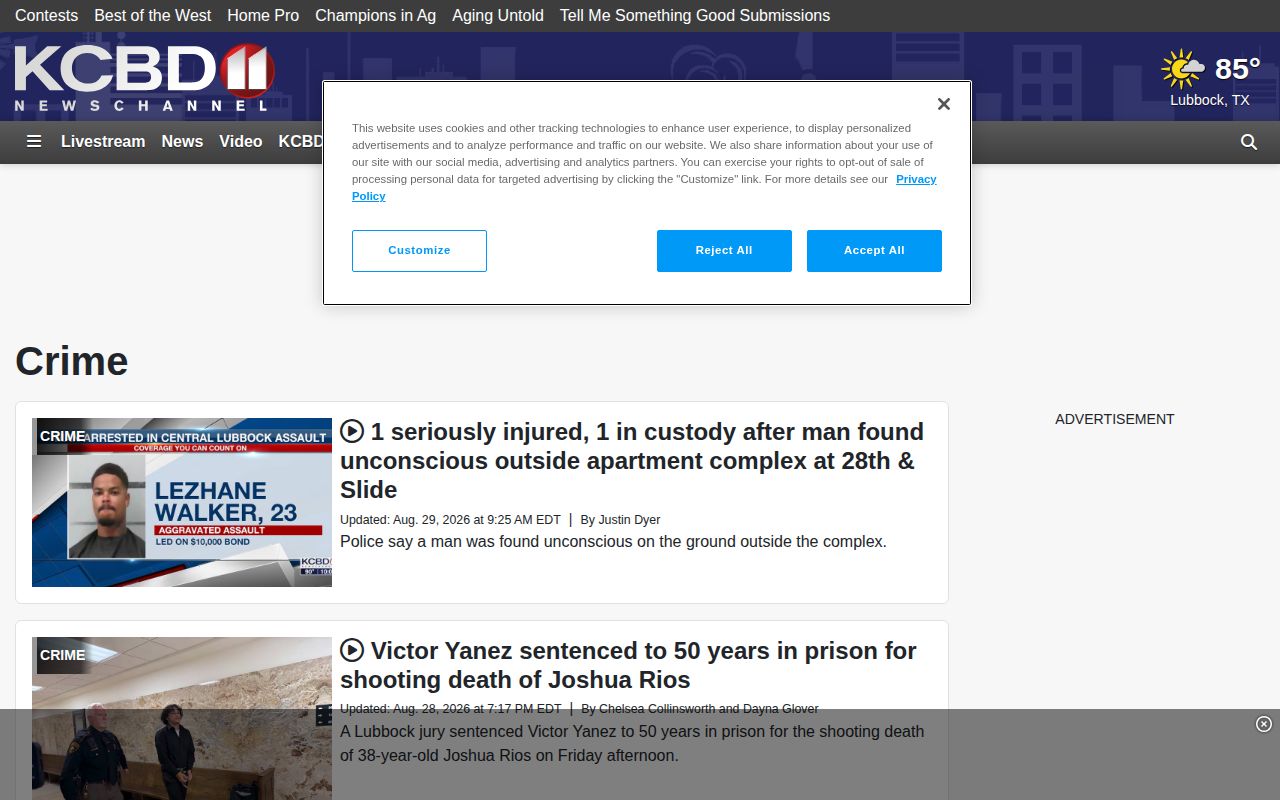
Regional stories supply context. A custody or booking question still belongs with the agency that holds the record. The Lamb County Leader-News is the local paper of record for this inventory. Its historical collection at the Texas Tech Southwest Collection preserves old "City Arrests" and "County Books" columns. Those issues can situate an older event in its local moment. The archive is not a live booking feed, though. Its listings carry inconsistent notes, so check current availability directly with the archive. One KCBD report from 2024 shows the gap between a story and a record. KCBD's Littlefield SWAT callout story reported an arrest with booking into Lamb County Jail.
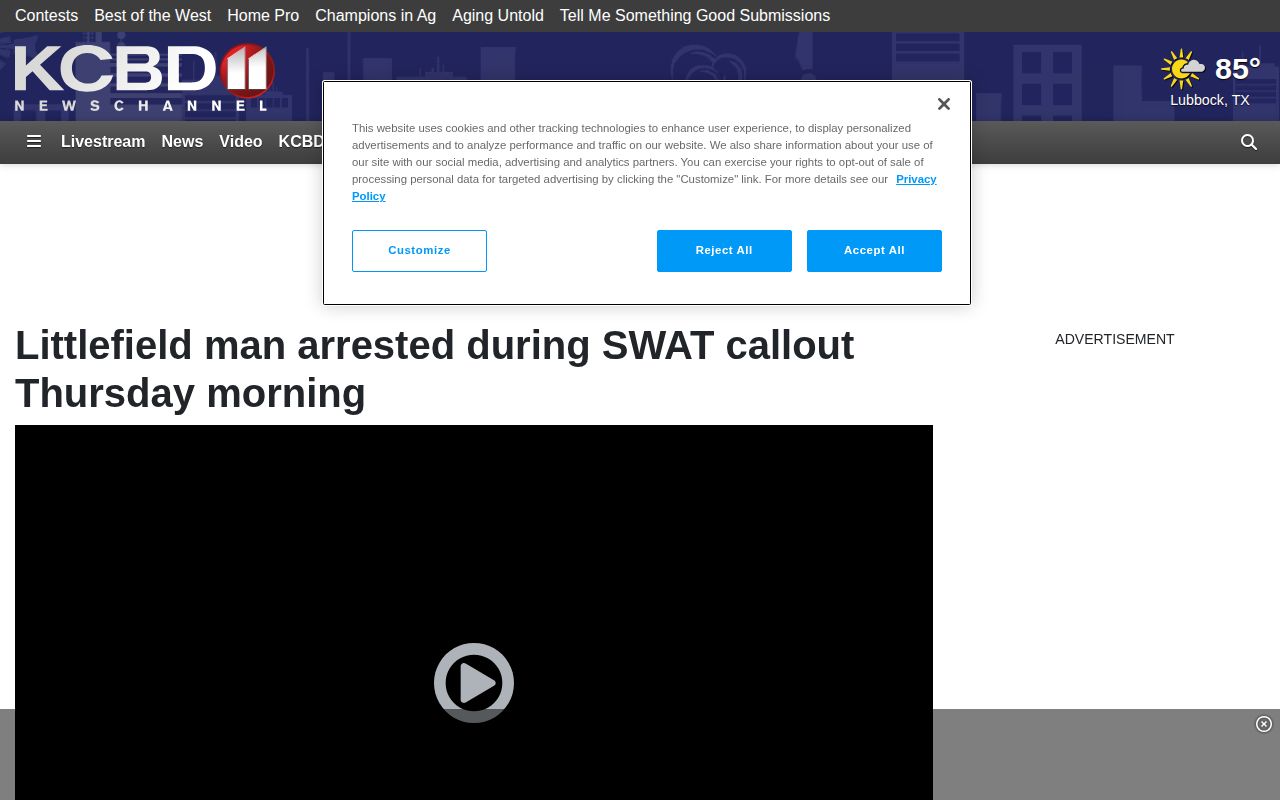
A reported booking points you toward the sheriff and the courts, which is where the answer lives. The related Littlefield booking-record route sorts out the difference between the city arresting agency and the county custody system.
How Lamb County Photos Reach News
How does a photo end up in the news? Usually through a law-enforcement release, a records request, or material a source provided during reporting. None of that means the agency runs a public gallery. It does not mean every booking produces a releasable photograph. The sheriff's published materials contain no photo policy, no photo search page, and no standing feed for reporters or the public. Texas public-information law can open agency records, subject to exceptions and redactions. Chapter 552 governs public access. Chapter 109 regulates certain business publication of criminal-record information. Neither one obliges the county to build a photo gallery. A good request names an existing record, the person, the approximate date, and the agency you believe holds it. The agency can then explain what is available, what is withheld, and what carries a fee. An image in a news story belongs to that outlet's reporting. Don't copy it into a gallery. Don't use it as a current identification tool. To learn whether a charge was amended, dismissed, or resolved another way, you need the court file.
From a Lamb County Story to Records
A news story is a starting point, not an ending. Jot three details down. Get the date, the agency the reporter names, and any booking location mentioned. Those facts carry you a long way. The countywide Lamb County custody and records path lays out the full set of official options, though a short sequence works just as well. Confirm the name first. Then check the sheriff's roster or phone line. Finally, look for the court file. That order keeps an article from becoming the final word on anyone.
- Use IVSS-Counties to check whether the person is currently in custody or supervision. An absent result can mean release or another limit of the service, so it is not proof that no booking occurred.
- Call the sheriff or the identified arresting agency for the current records process. Ask for the public-information custodian if a specific existing report or booking record is needed.
- Contact the County Clerk for misdemeanor case routing or the District Clerk for a felony case, and obtain the cause number when a public case is filed. Use re:SearchTX as an additional public search route where the case is integrated.
- Read the docket and final court material for the disposition. A disposition is the case outcome, such as a dismissal, plea, judgment, or another court action.
Important: The court file, not the news story or the booking record, is where a Lamb County case actually gets settled.
Timelines rarely line up. A story breaks first. An arrest record may surface later. The court case can trail both by weeks or months. Someone booked today might post bond within hours, yet their case stays open long after. So keep three dates in separate mental slots: the story date, the booking date, and the court date. Each one answers a different question. None of them tells the whole tale alone.
Why Lamb County Has No Feed
Lamb County simply has no live booking feed. Nothing official exists for same-day, weekly, or archived jail rosters. The police pages for Littlefield, Olton, and Sudan offer no recurring booking bulletins either. Old newspaper columns and scattered TV reports are the closest analogues, though neither works as a real jail list. The gap makes any reported arrest stubbornly hard to track down online.
Timing is part of the problem. Intake, transport, data entry, and a status update are each separate events, so a record can lag the arrest itself. IVSS posts status changes around the clock. The sheriff's published phone line is the direct fallback for a same-day question. For anything older, skip the search engines and private directories. Send a narrow written request instead.
Keep that request tight. Name the record. Give the approximate date. Name the arresting agency, and include any booking or case number you already have. The Texas Attorney General's public-information guidance says to submit requests in writing through a method the governmental body accepts, and to keep a copy plus proof of delivery. Lamb County posts no booking-photo fee and promises no turnaround. Ask the record custodian directly about the current process and any estimate.
Lamb County Booking and Court Path
What happens after booking? The county attorney FAQ lays out the next step. The accused appears before a judge. That judge announces the charge, sets bond, and advises rights. Misdemeanor cases are filed by complaint and information with the County Clerk, while the more serious felony matters move to district court. A booking entry and a court file are therefore connected sources, but they are never the same source.
The timeline can stretch. The FAQ's victim-information section puts the average run from arrest to trial at six months to two years, and individual cases vary widely. A person may be out on bond that entire time. When the matter is finally resolved, the court disposition is the document that says so. It is not the first news story or the booking photo.